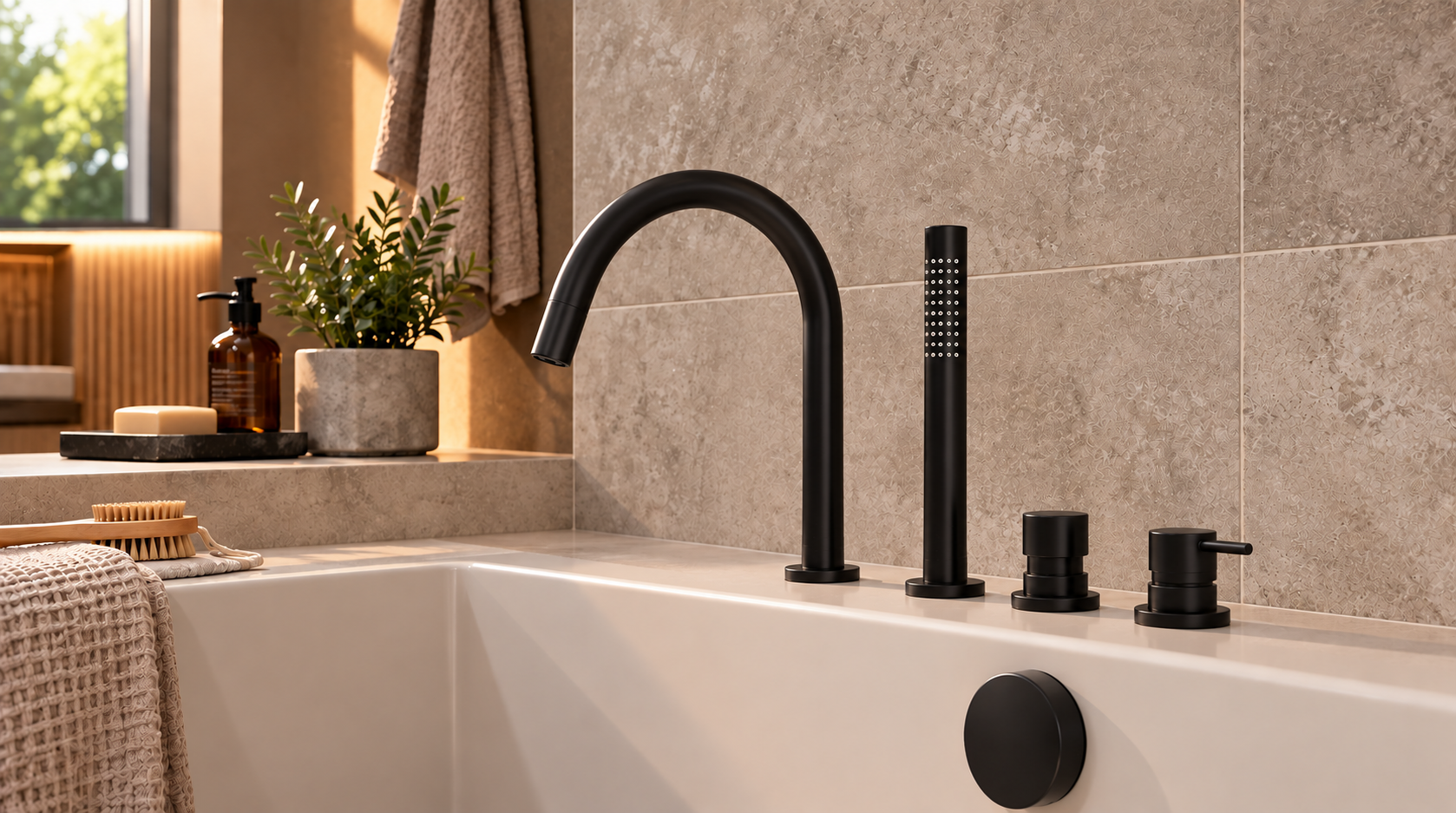
Remove limescale around a faucet base or rosette with a cloth soaked in diluted vinegar (one part vinegar to three parts water); wrap the cloth around the affected area rather than spraying it directly, leave it on for no more than 5 minutes, then wipe it clean and dry it thoroughly. Never let any acidic cleaner sit on the seal between the rosette and the wall or bathtub surface for longer than that, since prolonged exposure can damage the seal itself, not just the visible limescale. For matte or PVD-coated finishes, check the finish-specific guidance below, since the same vinegar method requires a shorter contact time than it does on standard chrome.
Why This Spot Accumulates Limescale Faster Than the Rest of the Faucet
A faucet’s base and its rosette (the decorative cover plate where the faucet piping meets the wall or bathtub surface) are located at the point where water most often runs down and pools briefly before draining away. Every time the faucet is used, a thin film of water runs down the spout and handles and collects right at this junction, then evaporates slowly rather than draining immediately the way water on the bathtub’s sloped surface does.
That slow evaporation is exactly the mechanism that causes limescale buildup. Water itself doesn’t leave calcium and magnesium behind—evaporating water does—and the base and rosette area evaporates more slowly than almost anywhere else on the fixture, since it sits in a tight gap with less air movement than the open bath surface around it.
Why This Matters Beyond Appearance
The rosette isn’t purely decorative. It typically covers and protects a seal—often a washer or silicone bead—that prevents water from seeping into the wall cavity or bath deck around the plumbing. Limescale that builds up under or around this seal over a long period can work its way into small gaps, and in some cases, this can compromise how well the seal fits against the wall or bath surface, creating a slow path for moisture to reach the wall cavity or deck beneath.
A few weeks of limescale doesn’t pose an immediate risk, but that’s why this specific area deserves more consistent attention than simply treating it as a purely cosmetic nuisance.
Safe Cleaning Method, Step by Step
-
Mix one part white vinegar with three parts warm water.
-
Soak a soft cloth in the solution rather than spraying it directly onto the faucet, since spraying risks the solution running down into the wall cavity or pooling under the rosette in a way that’s harder to control and rinse off completely.
-
Wrap the cloth around the base or rosette, pressing gently so the solution comes into contact with the limescale without forcing liquid up under the rosette’s edge.
-
Leave it on for 3–5 minutes. This is enough time to soften most limescale without prolonged acid exposure to the seal underneath.
-
Wipe clean with a second, plain damp cloth to remove all residue and any loosened limescale.
-
Dry thoroughly, working the cloth into the gap between the rosette and the wall or bathtub surface as far as it reasonably reaches, since trapped moisture here is exactly what causes the buildup to return more quickly next time.
For stubborn, thicker limescale: a soft-bristled toothbrush dampened with the same diluted vinegar solution can help work loosened deposits out of the gap between the rosette and the surface, using light pressure rather than scrubbing hard against the seal itself.
Adjusting the Method Based on the Surface Finish
|
Finish |
Vinegar contact time |
Extra care |
|
Chrome |
Up to 5 minutes |
Standard method as above; the most forgiving finish for this |
|
Brushed steel/nickel |
Up to 5 minutes |
Wipe in the direction of the brushed texture to avoid streaks |
|
Matte black (PVD or powder-coated) |
3 minutes maximum |
Prolonged or repeated exposure to acid can cause the matte finish to become unevenly dull; dry immediately and thoroughly |
|
Gunmetal/PVD gold/PVD bronze |
3 minutes maximum |
Same PVD sensitivity as matte black; never use anything abrasive along with the vinegar |
|
Oil-rubbed bronze (living finish) |
Avoid applying vinegar directly to visible patina areas whenever possible |
Prolonged exposure to acid can unevenly strip the oil finish and interfere with the development of the natural patina |
If you’re not sure which finish category your faucet falls into, check the manufacturer’s care instructions before using vinegar at all, since using it incorrectly on a PVD or living finish causes damage that cannot be reversed at home.
What to Never Use Here Specifically
In addition to the standard list of harsh cleaners to avoid on any faucet (bleach, ammonia-based cleaners, abrasive pads), the base and rosette area poses its own specific risks:
-
Undiluted vinegar or any strong acidic descaler, left on this spot for more than a few minutes, risks degrading the seal underneath, not just the visible finish.
-
A spray bottle aimed directly at the gap, which can push cleaning solution up under the rosette rather than just cleaning its visible surface, making it harder to fully rinse and dry afterward.
-
Forcing a stiff brush or tool into the gap between the rosette and the wall or bathtub surface, which risks mechanically damaging the seal rather than simply cleaning around it.
-
High-pressure cleaning (such as a jet-wash attachment or similar) directed at this junction, which can force water and cleaning residue past the seal in the same way it can at the seam of a shower valve.
Preventing Buildup Before It Starts
-
Wipe the base and rosette dry after every bath or shower—the same habit that protects the rest of the fixture, but worth emphasizing here specifically since this spot evaporates more slowly and benefits more from active drying than passive air exposure.
-
Check the condition of the seal every few months, looking for any signs that the rosette is sitting unevenly against the wall or bath surface, which may indicate that the seal has already begun to degrade and may need to be replaced before limescale becomes a secondary issue.
-
Tackle limescale while it’s still light, rather than letting it build up into a thick, chalky deposit, since thin, fresh limescale comes off much more easily with standard cleaning methods than months of accumulated buildup.
-
In hard water areas specifically, make cleaning this spot part of your weekly routine rather than an occasional deep-cleaning task, since hard water causes buildup here faster than almost anywhere else on the faucet.
Common Mistakes
-
Spraying vinegar or a descaler directly at the base instead of applying it with a soaked cloth, which risks the solution running under the rosette
-
Leaving an acidic cleaner on a matte black, PVD, or living bronze finish for the same amount of time that is safe on chrome
-
Scrubbing aggressively with a stiff brush to speed up limescale removal, risking damage to the seal underneath
-
Treating this spot as purely cosmetic and ignoring it until limescale is thick, rather than including it in regular cleaning
-
Failing to dry the gap between the rosette and the surface after cleaning, leaving it just as likely to develop buildup again quickly
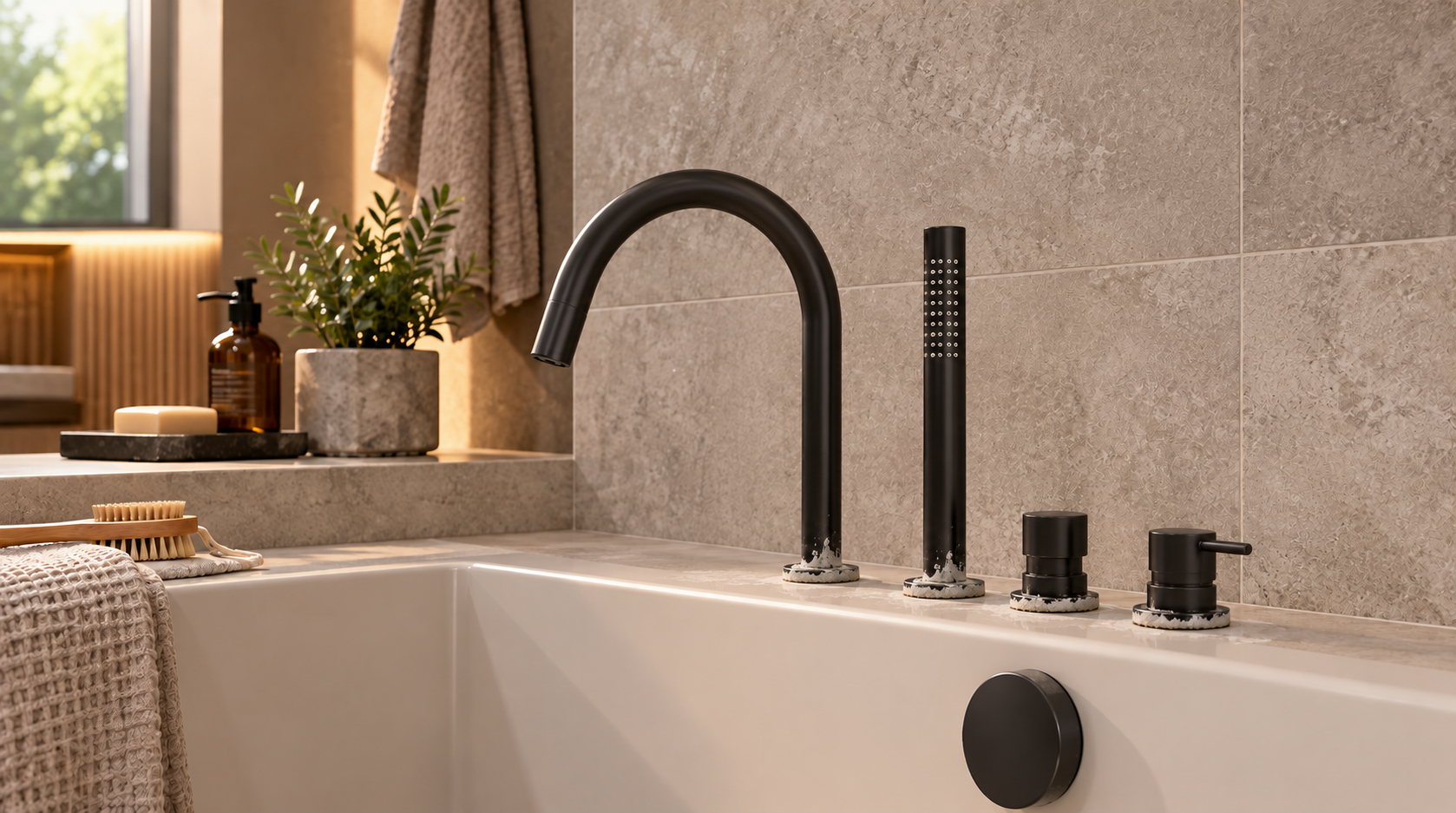
Limescale around a faucet base or rosette is as much a maintenance issue as it is a cosmetic one, since the seal underneath is what actually keeps water from seeping into the wall or bath deck. Use a damp cloth rather than a direct spray, keep the cleaning time brief—especially on matte or PVD finishes—and dry the area thoroughly afterward. Tackling it early, before it builds up into a thick deposit, makes every future cleaning easier.
FAQ
Can limescale around a faucet base actually cause a leak?
Not directly, but over a long period it can seep into the seal beneath the rosette and compromise how well it fits against the wall or bath surface, creating a slow path for moisture to reach behind the fixture. This is a gradual risk rather than an immediate one, which is why addressing limescale early matters more than it might seem.
Is it safe to use vinegar on a matte black faucet base?
Yes, but for a shorter contact time than with chrome—generally 3 minutes maximum, rather than up to 5. Prolonged or repeated exposure to acid can unevenly dull a matte PVD or powder-coated finish, so drying the area immediately afterward is more important for this finish than for standard chrome.
Why does limescale build up faster around the faucet base than on the bathtub itself?
The base and rosette sit in a tight gap with less airflow than the open, sloped surface of the tub, so water that collects there evaporates more slowly. Slower evaporation means more time for mineral deposits to settle and harden before the area fully dries.
Can I use a toothbrush to clean limescale from around the rosette?
Yes, a soft-bristled toothbrush dampened with diluted vinegar works well for loosening deposits in the gap, using light pressure. Avoid anything rigid or wire-bristled, which can damage the seal or scratch the surrounding finish.
Should I remove the rosette to clean behind it?
Not as part of routine maintenance. Most rosettes aren’t designed to be removed and reattached repeatedly without risking the integrity of the seal. If limescale has built up significantly behind or under the rosette despite regular surface cleaning, it’s best to have a plumber address this, as they can check the condition of the seal while it’s disassembled.
How often should I clean around the faucet base specifically?
Weekly in areas with hard water, since buildup occurs more quickly here than on most of the fixture. In areas with softer water, checking monthly and removing any visible limescale while it’s still light is usually sufficient.