PVD stands for Physical Vapour Deposition. It is a process in which metal is vaporised in a vacuüm and bonded to stainless steel as a thin layer. This is how gold and copper taps get their colour. The result is a durable, scratch-resistant finish that is much stronger than traditional chrome plating. Scratch-resistant is not the same as scratch-proof, however, so proper cleaning habits are important.
What is PVD?
PVD is a way to colour metal without paint or traditional electroplating. In a vacuum chamber, a metal is turned into vapour and applied to the tap in a layer just a few microns thick. The layer bonds firmly to the stainless steel underneath. To learn more about the process, read our article on the invisible power of PVD coating.
Why is PVD used on gold and copper taps?
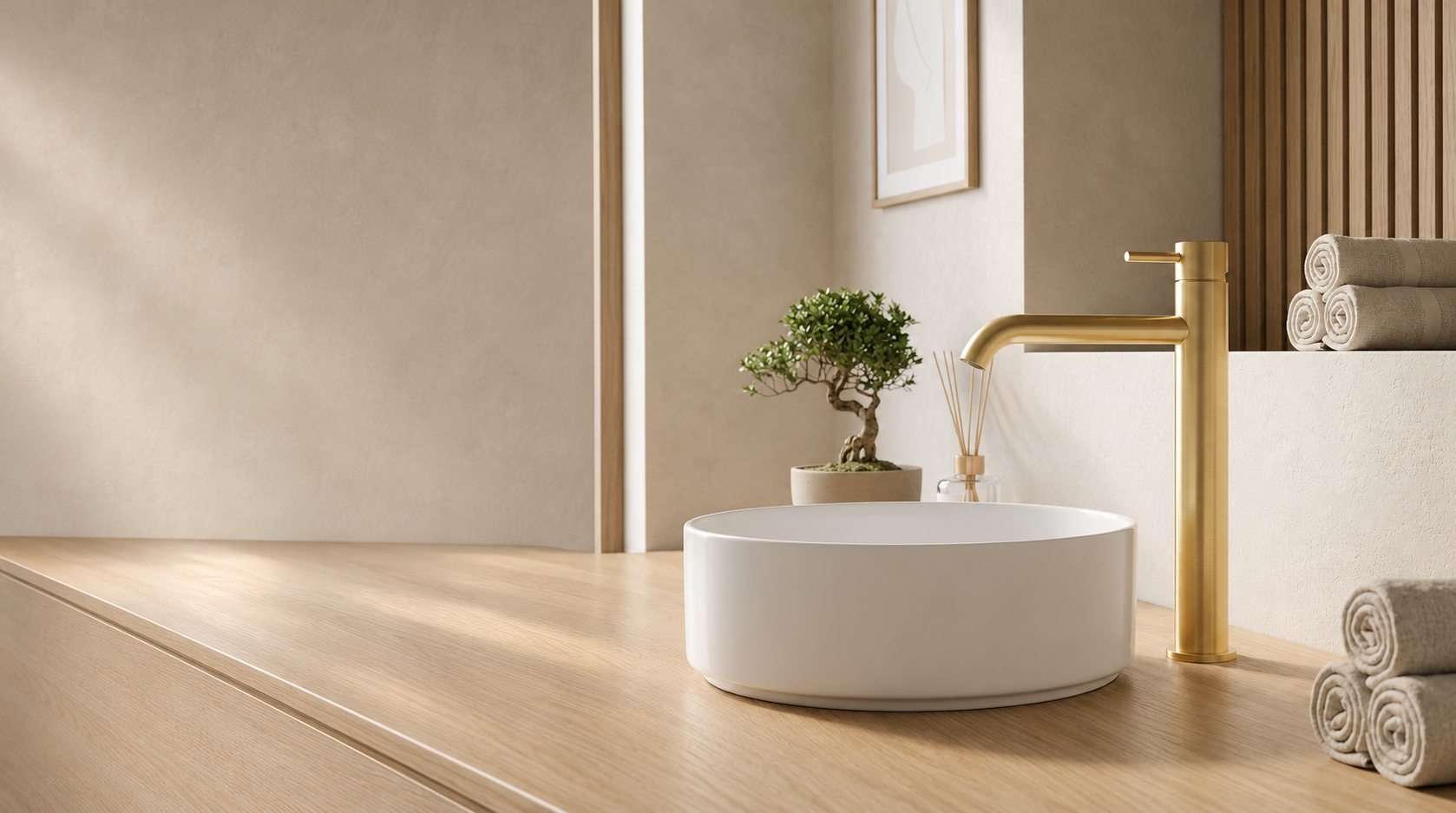
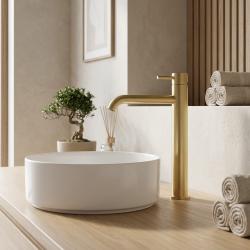
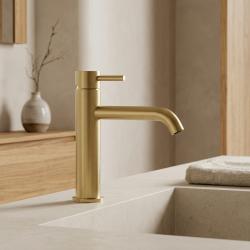
Warm metals such as gold and copper look beautiful, but a soft surface layer would wear quickly in a bathroom. PVD solves this. On the Aquanello Eterna brushed gold basin mixer tap, the PVD process bonds the gold layer firmly to the stainless steel. This gives it strong resistance to everyday wear while preserving the tap's warm appearance.
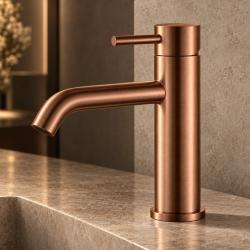
The same PVD technique is used throughout the Aquanello Eterna series, in brushed gold and brushed copper, so you can carry one warm finish throughout the bathroom.
Is a PVD tap scratch-resistant?
Yes. PVD is scratch-resistant and much stronger than electroplated chrome. It does not oxidise and resists most cleaning products.
Scratch-resistant, not scratch-proof
No finish is completely scratch-proof. Scouring pads, abrasive powders and rough cloths can still leave marks on the surface. Treat a PVD tap with the same care as fine jewellery, and it will retain its colour for years.
What are the limitations of PVD?
Even with a durable PVD finish, there are two everyday things to bear in mind:
-
Fingerprints may be visible, depending on the finish.
-
Hard water can leave marks if water droplets dry on the surface.
Both are easy to prevent with a quick wipe.
How do I keep a gold or copper PVD tap looking good?
-
Dry it after use. Dry the tap with a soft cloth to prevent water marks and limescale.
-
Use mild products. Clean with a soft cloth and a mild cleaning product.
-
Avoid abrasive products. Never use scouring pads, abrasive cleaning cream or harsh chemicals.
-
Do not let limescale build up. Regular gentle cleaning is better than occasional vigorous scrubbing.
For more tips, read how to care for gold bathroom taps.
Gold or copper: which PVD finish is right for you?
Brushed gold is warm and elegant, and looks beautiful with marble, travertine and crème tones. Brushed copper is softer and more natural, and pairs beautifully with wood and terracotta. Read copper bathroom taps: how to combine warm metal for styling ideas.
What are the most common mistakes?
-
Cleaning a PVD tap with a scouring pad or abrasive cleaning cream
-
Using strong descalers or bleach on the finish
-
Letting water droplets dry, allowing hard water to leave marks
-
Assuming "scratch-resistant" means nothing can ever mark it
A warm finish that lasts
PVD gives gold and copper taps their colour and the durability to retain it. Clean gently and dry after use, and your tap will look as warm as it did on day one. Read choosing the right finish for your tap to compare all the finishes.
FAQ
What does PVD mean?
Physical Vapour Deposition: a process that firmly bonds a thin metal layer to stainless steel in a vacuum.
Is a PVD tap scratch-resistant?
Yes. PVD is scratch-resistant and much stronger than chrome plating, but no finish is completely scratch-proof.
Does gold PVD fade?
PVD does not oxidise, and Eterna's gold finish retains its appearance for a long time under normal use.
How do I clean a PVD tap?
Use a soft cloth and a mild cleaning agent. Avoid abrasive materials and harsh chemicals.
Which Aquanello Eterna finishes have PVD?
Brushed gold and brushed copper.